
Info Posts, Installations
Chimney Register Plate

24
Jul
Jul
Stove Register Plate / Chimney closure plate
So many names for the same thing! Years after the creation of a register plate it has adopted a number of different names not sure its a geographical naming thing but you may find it called a few different things;
- Register Plate
- Chimney Closure Plate
- Stove Register Plate
- Stove Plate
- Closure Plate
- Flue Sealing Plate
It’s no wonder things can get a little confusing when it has so many names. The fact of the matter remains the same though, regardless of what its called it does the same job!
What is a register plate?
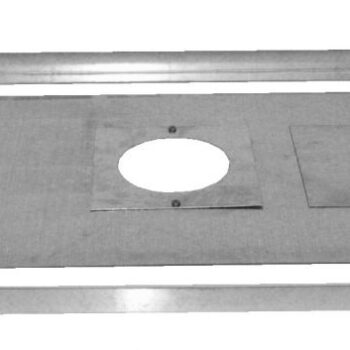
You will find the need of a chimney register plate when you are installing a stove into a chimney. The job of the Register plate is to seal off the chimney so only the flue connection to the stove can pass through.
As stoves rely on an air draw to work efficiently and avoid any smoke coming back into the room then the register plate is essential to allow the chimney to do its job for the stove.
Furthermore, a register plate assists with heat loss from your stove as it stops it escaping up the void in the chimney. Therefore heating your room more effectively.
As the chimney is a tall open void the register plate is useful in stopping any falling debris landing in or around your fireplace.
- Seals off the chimney
- Helps the stove work efficiently
- Stops heat loss
- Prevents debris falling
How to fit a stove plate?
You will need to buy or create four angled brackets, Secure your angled brackets into the four inside walls of the chimney using suitable fixings. You are aiming to have the plate sat just above the opening to the chimney.
Cut the plate to size using appropriate cutting tools ensure you have if not already supplied cut access for the flue liner to pass through. Connect your liner through the plate and sit the plate upon your brackets.

Building a Recess that needs a register plate
If your looking for information regarding register plates then you must be considering building a recess for your stove / fireplace some helpful tips when it comes to building a recess its not only about the closure plate…
- Dimensions, consider a minimum of 1100mm wide x 900mm high. Bigger is better so far as a recess is concerned. Ensure you measure your beam or surround choice and leave extra either side of the opening.
- Lintel, over spec this, we favour a 140mm x 100mm Reinforced concrete lintel as a minimum.
- Inside the recess, a matter of choice, non combustible is necessary, not plasterboard of any description. Check out our range of inglenook chambers…
- Hearth, again, a matter of choice, we favour a nice thick piece of slate. Further, make sure you allow plenty of hearth in front of the stove. Legally, 225mm in front of a closed appliance, we prefer 300mm. Further, make sure the original construction hearth is solid, if not, repair as necessary.
- Making good the face, a smooth plaster finish, normal plaster will suffice for a recess, feather it in or re plaster the whole chimney breast. Some work with a trowel and some lightweight filler when decorating will create a good finish. If perfection is needed, go for a full re plaster of the entire chimney breast.
- Skirting boards, nothing combustible should be placed on the hearth! Truncate the skirting boards at the edge of the hearth, if an up stand is needed, use the hearth material in place of timber.
Have a question about register plates?

 Stoves
 Bio Ethanol Fires
 Beams
Beams Fireplace Surrounds
 Hearths
 Fireside Services
 Logs For Wood Burner
 Outdoor Living
 Instant Quote
 Contact Hot Box®